

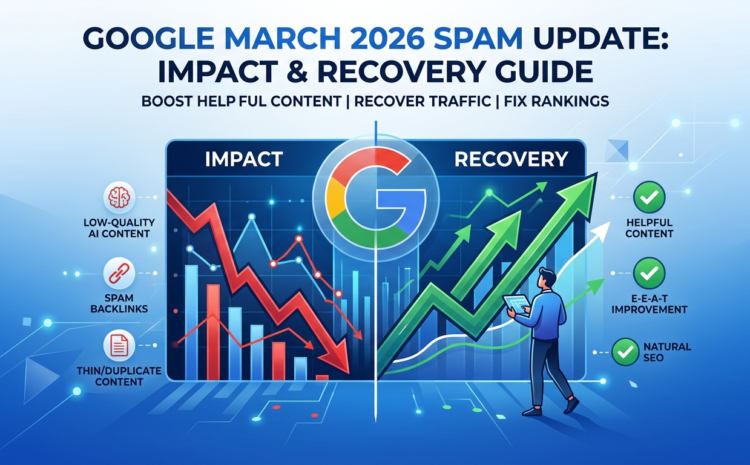
Google March 2026 Spam Update: The Complete Guide to Impact, Problems, and Recovery Strategies
Last Updated: 26 march 2026 6PM
The field of search engine optimization has just experienced a massive seismic shift. On March 24, 2026, Google officially launched the highly anticipated March 2026 Spam Update. What shocked the SEO community the most was not just the severity of the update, but the unprecedented speed at which it occurred. Completing its global rollout in under 20 hours by March 25, this update serves as a stark reminder of how powerful and agile Google’s automated spam detection systems have become.
Unlike broad core updates that reassess overall site quality, this specific algorithmic shift was a targeted strike. It ruthlessly clamped down on manipulative SEO tactics and enforced existing spam policies with ruthless efficiency. If you have seen a sudden, sharp decline in your website’s traffic or search rankings over the last few days, you are not alone.
In this comprehensive guide, we will break down exactly what this update targeted, the major problems that caused websites to lose their rankings, and the actionable solutions you need to implement to recover and thrive in 2026.
📊 Summary: What Actually Happened?
The March 2026 Spam Update can be summarized by three major shifts in the search ecosystem:
Massive Demotion of Spam Websites: Google’s upgraded AI-based spam-prevention system, SpamBrain, specifically targeted websites that existed purely to manipulate search engine rankings. Sites relying on deceptive redirects, cloaking, and expired domain abuse saw their visibility wiped out almost overnight.
The Crackdown on Low-Quality & AI Spam Content: The update heavily penalized domains engaging in “scaled content abuse.” Websites that published bulk, unedited, AI-generated articles with no original insight or value were rapidly removed from top search results.
A Massive Boost for Helpful, Real Content: Because search is a zero-sum game, the penalization of spammy websites created a vacuum at the top of the Search Engine Results Pages (SERPs). This resulted in a massive boost for authentic, user-focused websites that publish genuinely helpful, well-researched, and human-driven content.
⚠️ The Core Problems: Why Websites Lost Traffic
Google’s swift rollout was designed to target very specific violations of its spam policies. If your website experienced a drop in traffic, it is highly likely that your site—or the SEO agency managing it—was engaging in one or more of the following problematic practices:
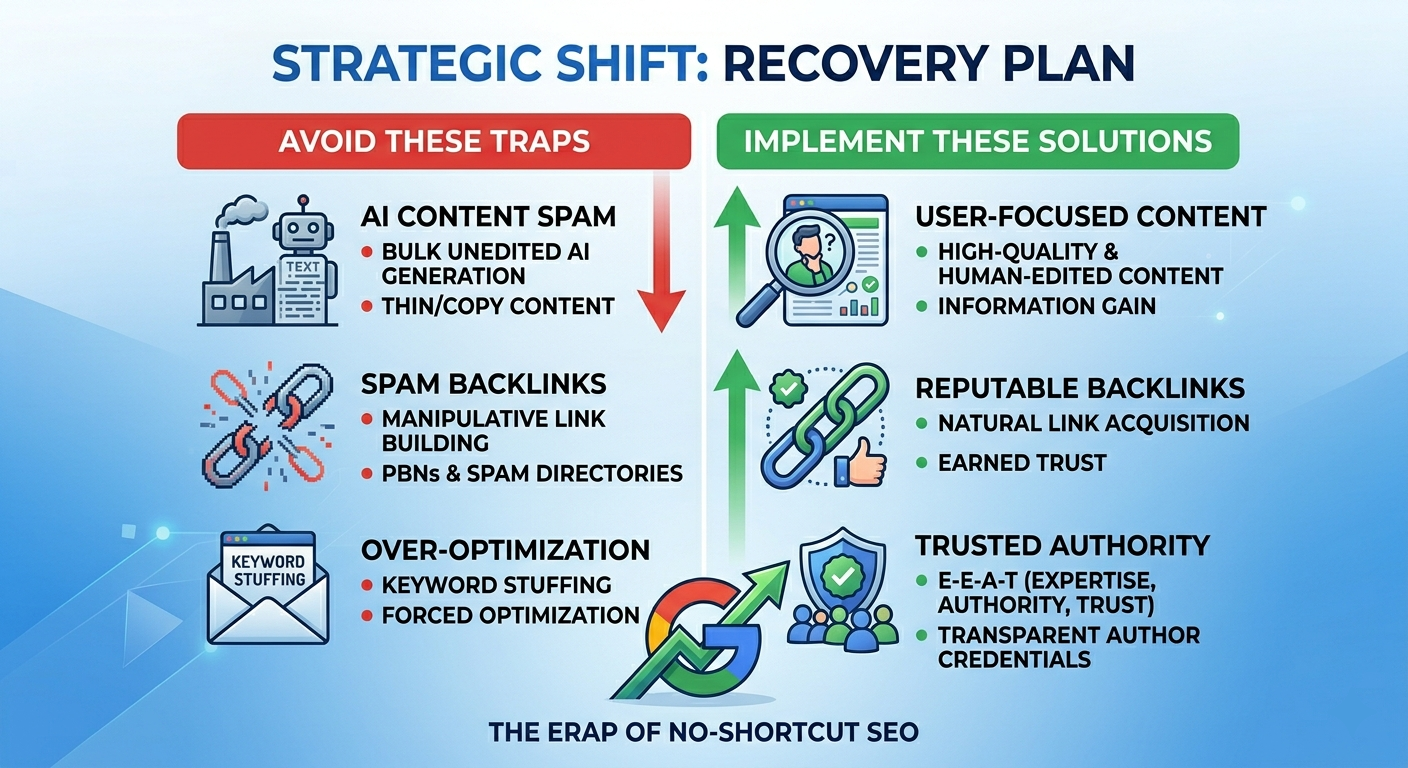
1. Bulk AI-Generated Low-Quality Content
With the rise of generative AI, many publishers attempted to take shortcuts by generating thousands of articles with a single click. Google’s algorithms are now highly adept at recognizing automated, bot-like phrasing and structural patterns. The issue isn’t AI itself; the problem is mass-producing shallow, unedited content that offers absolutely zero new information or unique perspectives to the reader.
2. Keyword Stuffing and Forced Optimization
An outdated but stubbornly persistent tactic, keyword stuffing involves unnaturally forcing target keywords into content, meta tags, and headers to trick the algorithm. Google’s semantic search capabilities now easily flag content that is written for bots rather than human readers, resulting in immediate ranking drops for over-optimized pages.
3. Spam Backlinks and Link Manipulation
Link building remains a cornerstone of SEO, but artificial link manipulation was severely punished in this update. Websites relying on purchased links, Private Blog Networks (PBNs), spammy directory submissions, and hidden text links saw their artificial authority stripped away. When Google neutralizes the value of these spam links, the ranking boost they provided disappears permanently.
4. Thin and Copied Content
If your website features scraped content from other sources or pages with very little text that fail to answer the user’s search intent, you are in the danger zone. Google wants “information gain”—meaning your page must offer something that the other ten pages on the search results do not. Duplicate and thin pages were aggressively filtered out.
5. Fake Affiliate Pages and Doorway Sites
Affiliate marketers were hit exceptionally hard if their sites lacked genuine product testing. Creating landing pages simply to rank for a keyword and funnel users to an affiliate link—without offering an authentic review, personal experience, or unique media—is a direct violation of Google’s guidelines.
✅ Solutions and Fixes: How to Recover Your Rankings
If your site was negatively impacted, panic is not the answer. Recovery is entirely possible, provided you are willing to clean up your site and align with Google’s quality standards. Here is your step-by-step recovery roadmap:
1. Write High-Quality, User-Focused Content
Shift your entire strategy from “writing for search engines” to “writing for the user.” Answer the user’s questions clearly, provide in-depth analysis, and ensure your content is easy to read. High-quality content retains visitors, lowers bounce rates, and naturally earns the organic engagement metrics that Google heavily rewards.
2. Human-Edit and Elevate AI Content
You do not have to abandon AI tools, but you must change how you use them. Treat AI as a drafting assistant, not a final publisher. Every piece of AI-generated content must go through a rigorous human editing process. Fact-check the data, inject your personal brand voice, add real-world examples, and structure the article to provide genuine value.
3. Audit and Remove Spam Backlinks
Conduct a thorough backlink audit using tools like Google Search Console or Ahrefs. Identify toxic, unnatural, or paid links pointing to your site. While Google is generally good at ignoring bad links, a heavily manipulated link profile can still drag you down. Focus your future efforts on digital PR and earning natural links through high-quality, shareable content.
4. Delete or Merge Thin Pages (Content Pruning)
Perform a content audit to identify pages that get zero traffic, offer little value, or compete with your own stronger pages (keyword cannibalization). You have three options: update them to make them comprehensive, merge them using 301 redirects into a single, authoritative “master guide,” or simply delete them entirely. A smaller website with 50 phenomenal pages will always outperform a bloated site with 5,000 mediocre ones.
5. Significantly Improve E-E-A-T
Experience, Expertise, Authoritativeness, and Trustworthiness (E-E-A-T) are more critical than ever. Prove to Google that you are a legitimate entity. Add detailed author biographies showcasing real credentials. Include clear contact information, a transparent “About Us” page, privacy policies, and verified customer reviews. If you are writing a product review, include original photos and explicitly state your testing methodology.
6. Embrace Natural SEO Practices
Stop obsessing over perfect keyword density. Instead, optimize naturally. Use conversational language, structure your articles with clear H2 and H3 tags, and ensure your Core Web Vitals (site speed and mobile-friendliness) are optimized. Natural SEO means building an ecosystem where search engines easily understand your site because it is meticulously organized for human convenience.
🎯 Final Verdict: The Era of No-Shortcut SEO
The Google March 2026 Spam Update has cemented one undeniable reality: Quality content is the only thing that will rank. The days of gaming the system, exploiting loopholes, and relying on cheap shortcut SEO tactics are officially over. Google’s sub-20-hour algorithm rollout proves that their automated detection systems are faster, smarter, and more unforgiving than ever before.
If you want long-term, sustainable traffic, you must stop treating SEO as a trick and start treating it as a byproduct of digital excellence. Build a trustworthy brand, publish undeniably valuable content, and put your users first. When you build for the user, you future-proof your website against every algorithmic update yet to come. 🚀


Write a Comment